
V A S T
The Operating System For The AI Era
One Platform, Infinite Possibilities
The VAST AI Operating System unifies storage, database, and compute to transform data into action.
Built on the revolutionary DASE architecture, this OS is engineered to break critical barriers to scale, performance, and security, ultimately driving real business outcomes from your most demanding AI workloads. The power of the VAST AI OS is realized through its core, integrated components.
Most AI teams manage separate systems for storage, data ingestion, analytics, vector search, streaming, and AI runtime. The VAST AI OS pulls all of it into a single unified infrastructure layer. One platform: Simple. Reliable. Secure.
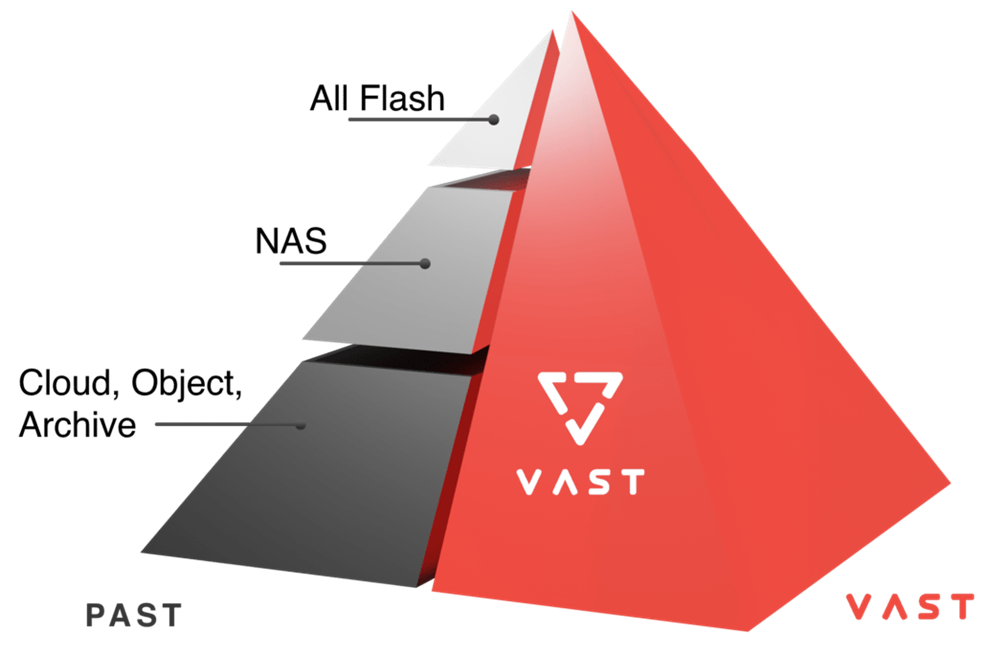
Legacy storage architectures force artificial trade-offs between scale, speed, and simplicity and can’t meet stringent AI price-performance demands. VAST replaces tiers with a single universal, AI-optimized platform.
The VAST Plataform
Every capability in the VAST AI OS runs on a single architecture: DASE (Disaggregated Shared-Everything). DASE separates compute from capacity so each can scale independently, and it gives every node access to the full global dataset. That’s how the AI OS keeps adding capabilities — database, event streaming, vector search, agent orchestration — without compromise.
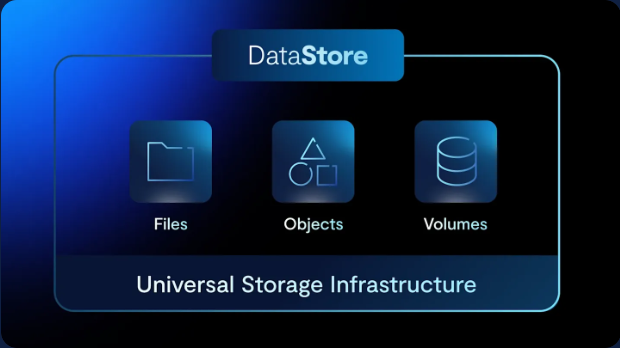
DataStore Unified Storage
Every workflow starts here. Enterprise data, whether block, file, or object, is written to the DataStore, a single exabyte-scale foundation that consolidates all of it without the tiering and silos that slow AI.
Best data reduction. Get the most value out of every PB of capacity you deploy.
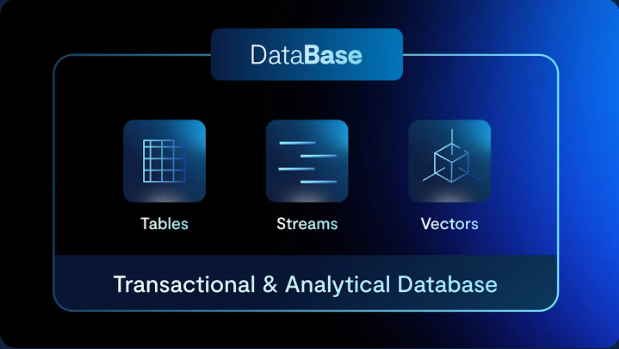
DataBase Transactional & Analytical Database
Next, data is chunked, embedded, and stored as vectors in the DataBase, alongside structured tables and streaming data, so unstructured and structured data streams are instantly ready for query and similarity search.
20× faster analytical queries vs. Iceberg stacks.
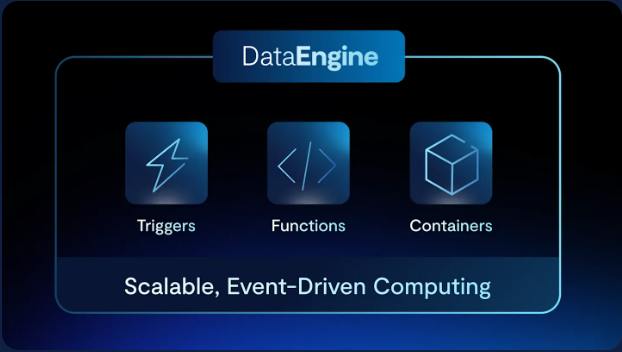
DataEngine AI Pipeline Automation
The DataEngine then acts on it, leveraging python functions and a built-in Kafka-compatible message bus, triggering agents the moment data changes to take actions directly against it, turning a passive store into an active platform.
Lower TCO and faster TTV with integrated Kafka and pipeline orchestration tools.
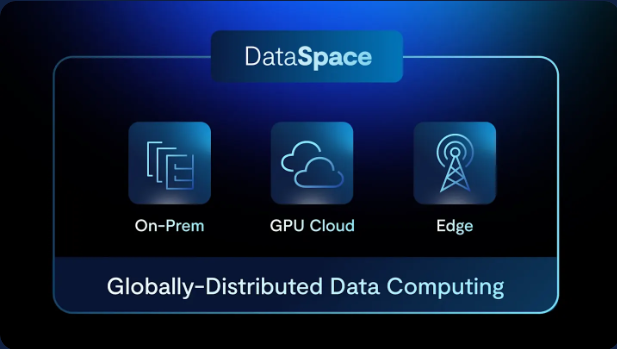
DataSpace Global Namespace
This makes that data available to the GPUs that need it, wherever they sit, leveraging a federated global namespace that spans clusters, within or across data centers, on-prem or off, from edge to cloud.
Real-time access to any data, anywhere.
Use Cases
VAST Data Universal Storage
Collapse Storage Silos with VAST Universal Storage
Universal Storage combines block, file, and object onto one unified AI OS. Run VMs, containers, and AI in a single namespace to fuel data center modernization, enhancing manageability, scalability, and affordability.

For years, enterprises relied on buying separate storage systems for different workloads: block arrays for VMs, scale-out NAS for file, and object stores for archives. To strike a balance between speed and cost, companies were forced to tier data, from high-speed flash to cost-effective disk. Now, AI is pushing data volumes and performance requirements past what these systems can handle.
Universal Storage changes the equation. VAST’s Disaggregated, Shared-Everything (DASE) architecture collapses those silos into one all-flash platform that serves block, file, and object from a single namespace. Every workload—VMs, containers, analytics, and AI—draws from the same pool at all-flash speed, with no tiering, no rebalancing, and linear scale that grows without downtime or performance drops.
With these barriers removed, you can modernize without the risk of a rip-and-replace migration. Run existing VMs alongside cloud-native apps, consolidate fragmented systems onto one foundation, and manage it all through a single interface; then grow into AI on the same platform without another storage silo.
AI Lakehouse
Build an AI Lakehouse on VAST.
As modern query engines like Spark and Trino replaced Hadoop, organizations abandoned HDFS and DAS-based architectures in favor of AWS S3-based object storage. However, S3’s lower performance required query engines to introduce workarounds such as middleware caching, which greatly complicated the architectures.

Modernize the Lakehouse Without Rebuilding It
Modernize your lakehouse without abandoning the open analytics ecosystem. VAST preserves Spark, Trino, SQL, Python, and familiar data engineering patterns while replacing file-based bottlenecks with a shared-everything architecture built for continuously updated analytics, higher concurrency, and dramatically simpler infrastructure.
Keep your data lake while modernizing the analytical layer above it. VAST DataBase replaces file-based analytical tables with a native database designed for continuously updated data, high-concurrency lookups, and large analytical scans, reducing the compaction and synchronization overhead of traditional lakehouse architectures.
From ingestion through analytics, every stage runs on the same shared platform. Stream data, transform it with Spark, Trino, SQL, or Python, and query governed datasets without the infrastructure sprawl, duplication, and synchronization required by traditional lakehouse architectures.
Enterprise AI Factory
Powering the Enterprise AI Revolution with VAST
Build an Enterprise AI Factory that can power hyperscale vector search, real-time ingest and vectorization, and fully automated RAG workflows on one unified platform. The VAST AI OS is built to deliver enterprise-grade performance, governance, and scale for the next generation of intelligent, data-driven applications.
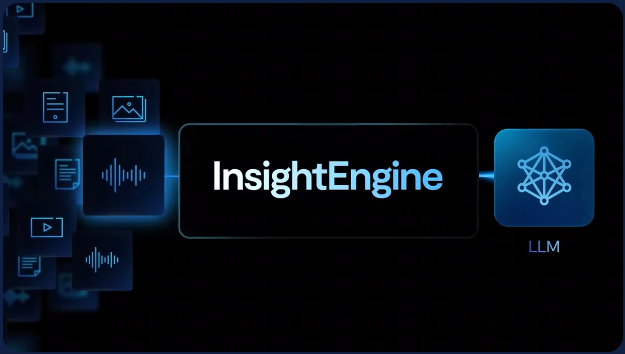
The Inflection Point for Enterprise AI
Enterprises are standing at a turning point in AI. Until now, the cost and complexity of building Enterprise AI Factories capable of real-time ingestion, retrieval, reasoning, and automation made true operational AI impractical. Traditional architectures, designed for batch processing and tiered storage, simply couldn’t deliver the performance, governance, or economics required for continuous, intelligent systems.
VAST’s Disaggregated Shared-Everything (DASE) architecture changes that equation. By unifying storage, database services, event processing, and compute on a single flash-native platform with linear scalability, DASE eliminates the trade-offs that have constrained enterprise AI for decades. What was once prohibitively expensive and operationally fragile is now both achievable and efficient.
For the first time, enterprises can build Enterprise AI Factories that continuously ingest data, generate knowledge, reason over live information, and automate intelligent workflows in real time, transforming AI from an experimental initiative into a production-ready foundation for the business.
The VAST DataEngine is a programmable, event-driven execution layer that transforms your data platform into an active foundation for Enterprise AI Factories. With DataEngine, VAST automates AI pipelines, real-time data processing, and intelligent workflows using event triggers, serverless functions, and native compute, bringing AI to the data instead of moving data to AI.
VAST Data for HPC – High Performance Computing
Feed Every Core and Every GPU From One Flash Namespace
An HPC job can run for weeks. It should not lose an hour to a stalled data path or a tuning pass. VAST DataStore serves large sequential simulation I/O and millions of random small-file AI reads from one all-flash namespace, with no Lustre or GPFS tuning to maintain, so tightly-coupled MPI and GPU training run on the same system.
Simulation Scales. The File System Fights Back.
Modern HPC teams run tightly-coupled MPI jobs and data-hungry AI on the same clusters, but the storage underneath was tuned for one pattern, not both. Keeping a parallel file system fast means constant tuning, staging, and duplicate infrastructure, and every hour of downtime on a multi-week job is compute you never get back.
The Parallel File System Was Built for a Problem You No Longer Have
For decades, HPC storage optimized for one thing: streaming huge, sequential writes from thousands of nodes to disk as fast as possible. Lustre and GPFS were engineered around exactly that. The price of admission was complexity, constant tuning, and a team of specialists to keep it fed.
Then the work changed. HPC and AI collapsed onto the same clusters, and one clean sequential stream stopped describing it. Now the demand is tightly-coupled MPI simulation and millions of unpredictable small-file reads for training and inference, side by side. Bolt AI onto a disk-based parallel file system and you stage data, stand up a duplicate all-flash tier, or watch GPUs idle while metadata catches up.
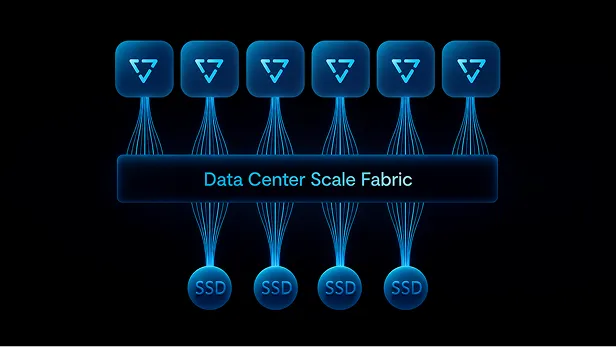
VAST’s Disaggregated and Shared-Everything (DASE) architecture separates stateless compute (CNodes) from the media (DNodes) over NVMe-oF, so every CNode reaches every SSD directly. No cross-node chatter. No central metadata server in the path. No stripe tuning. Throughput grows by adding CNodes, capacity grows independently by adding DNodes, and both sequential simulation I/O and random AI reads run fast on one all-flash namespace. The result is HPC-class throughput and NAS-class simplicity on a single system, at exascale, engineered to ride through the failures that weeks-long jobs make inevitable.
One All-Flash System for Simulation and AI
VAST DataStore gives HPC teams parallel-file-system performance without the operational tax. Files, objects, and volumes live as native Elements in one global namespace on the DASE architecture, so tightly-coupled simulation and data-intensive AI share the same storage with no staging, no duplicate clusters, and no tuning treadmill.
HPC in Action – Proven Where Every Cycle Counts !
HPC teams across research and industry run VAST DataStore where downtime is unacceptable and workloads mix tightly-coupled simulation with data-intensive AI. These are the environments that put the architecture to the test.
Cyber Resilience with VAST
Recover from Any Attack in Minutes, Not Days !
Ransomware crews now hunt the backups before they touch production. VAST DataStore keeps immutable snapshots on the primary all-flash tier or backup images from one of our supported partner solutions, under a retention policy no stolen credential can override. When an attack detonates, you verify a known-clean point in time, roll it back at flash speed, and keep the business running.
When the Attack happens, the Clock Starts and Recovery Speed Matters
Ransomware has moved past prevention. Attackers dwell for weeks, encrypt the backup catalog first, and detonate the primary payload when it hurts most. The question is no longer whether an attack gets in, but how fast you can bring back a copy you can trust. For most teams the answer is measured in days on slow disk and tape, while the business sits idle and the ransom clock runs.

Protection and Recovery on One All-Flash Tier
Three architectural choices separate VAST from the backup-appliance model: immutability enforced beneath the credential layer, recovery measured in minutes because it never leaves flash, and durability that survives hardware failure and attack alike.
- Unbeatable Immutability
Traditional immutability lives in software that a stolen administrator credential can reconfigure or switch off. VAST DataStore enforces snapshot retention as a policy the management plane itself cannot revoke, so a locked snapshot cannot be shortened, altered, or deleted by any account, including root, until its retention expires. Snapshots are redirect-on-write and space-efficient, so keeping hundreds of granular recovery points costs a fraction of a full copy. The result is a set of recovery points that stay trustworthy even after an attacker holds full control of the environment. - Recover Petabytes in Minutes, Not Days
Restoring from a deduplicated disk target or an offsite vault means restoring every byte across a slow tier, which is why petabyte restores run for days or weeks. VAST DataStore keeps every snapshot on the same all-flash namespace as production, so a rollback is a metadata operation, not a data copy. You revert an entire file system or dataset to a known-clean point in time and bring services back online in minutes. The result is a recovery time objective set by the pace of the attack, not the pace of tape. - Durability That Survives Hardware and Attack
A recovery copy is only useful if the media holding it is intact. VAST DataStore protects data with wide erasure stripes that ensures availability through four concurrent SSD failures at 2.7 percent overhead and delivers 11 nines of durability, with an SCM write buffer that extends flash longevity by about 20 times. The same architecture that keeps production fast keeps the recovery points intact through device failures, node loss, and non-disruptive upgrades. The result is one tier you can trust to be both online and intact when it matters most.
Talk to our experts and discover how Imexperts can help your organization.
Brazil
+55 (11) 2389-1106 | contato@imexperts.com.br
Av. das Nações Unidas 14261, Torre B, 25 Andar, Conj. 2501B
São Paulo – SP | 04794-000
Mexico
+52 (55) 9183-2049 | comercial@imexperts.com.mx
Prolongación Paseo de la Reforma 1015 - Piso 7
Lomas de Santa Fe, Cuajimalpa,
Ciudad de México | 05348